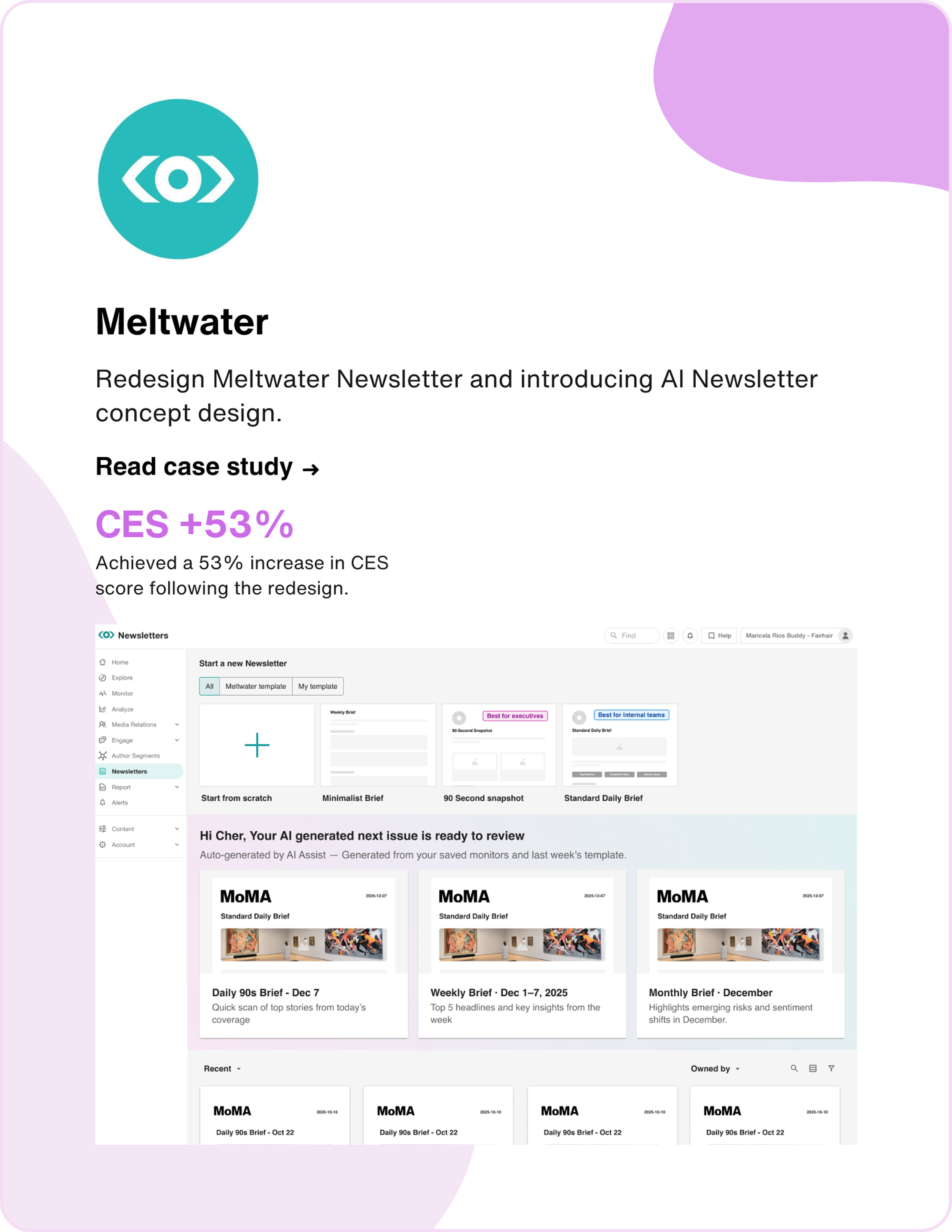
As the lead product designer, I redefined Newsletter from a static reporting tool into an engagement infrastructure — transforming a 46-step workflow into an AI-powered experience and driving a 53% CES improvement.
Meltwater is a global leader in media intelligence, serving 30,000+ companies with media monitoring, social listening, and PR analytics. Newsletter is one of its most-used features — the primary way PR teams deliver curated media updates to stakeholders. Originally a static reporting tool, I reframed it as an engagement infrastructure — enabling scalable creation, intelligent prioritization, and faster decisions.
"Newsletter" ≠ Newsletter
"Newsletter" = Media monitoring roundup
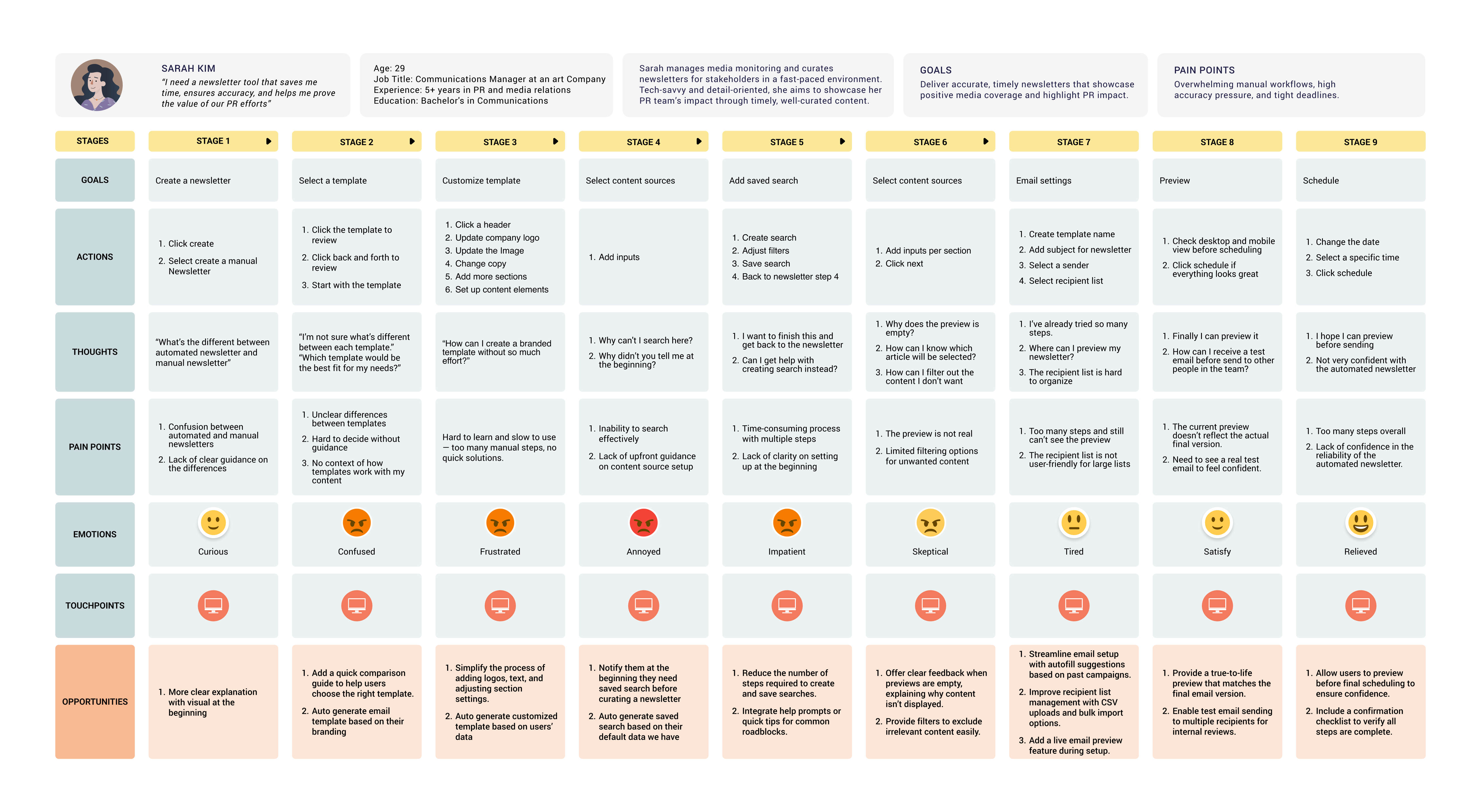
Through FullStory session analysis, user interviews, and journey mapping, I identified the core pain points driving user frustration.
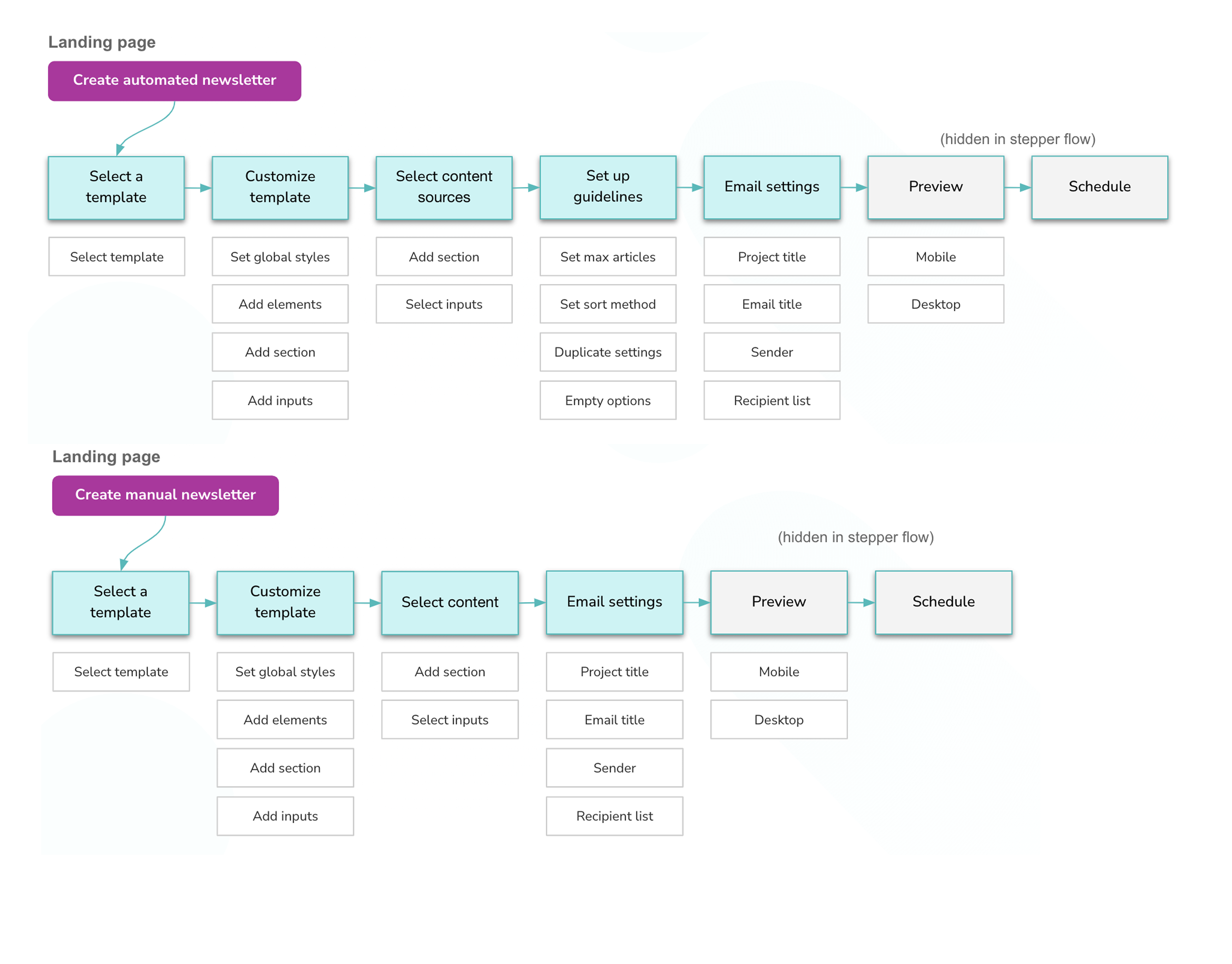
Creating a single newsletter required navigating 46 steps across multiple screens — selecting templates, configuring settings, adding content, and scheduling — with no shortcuts or automation.
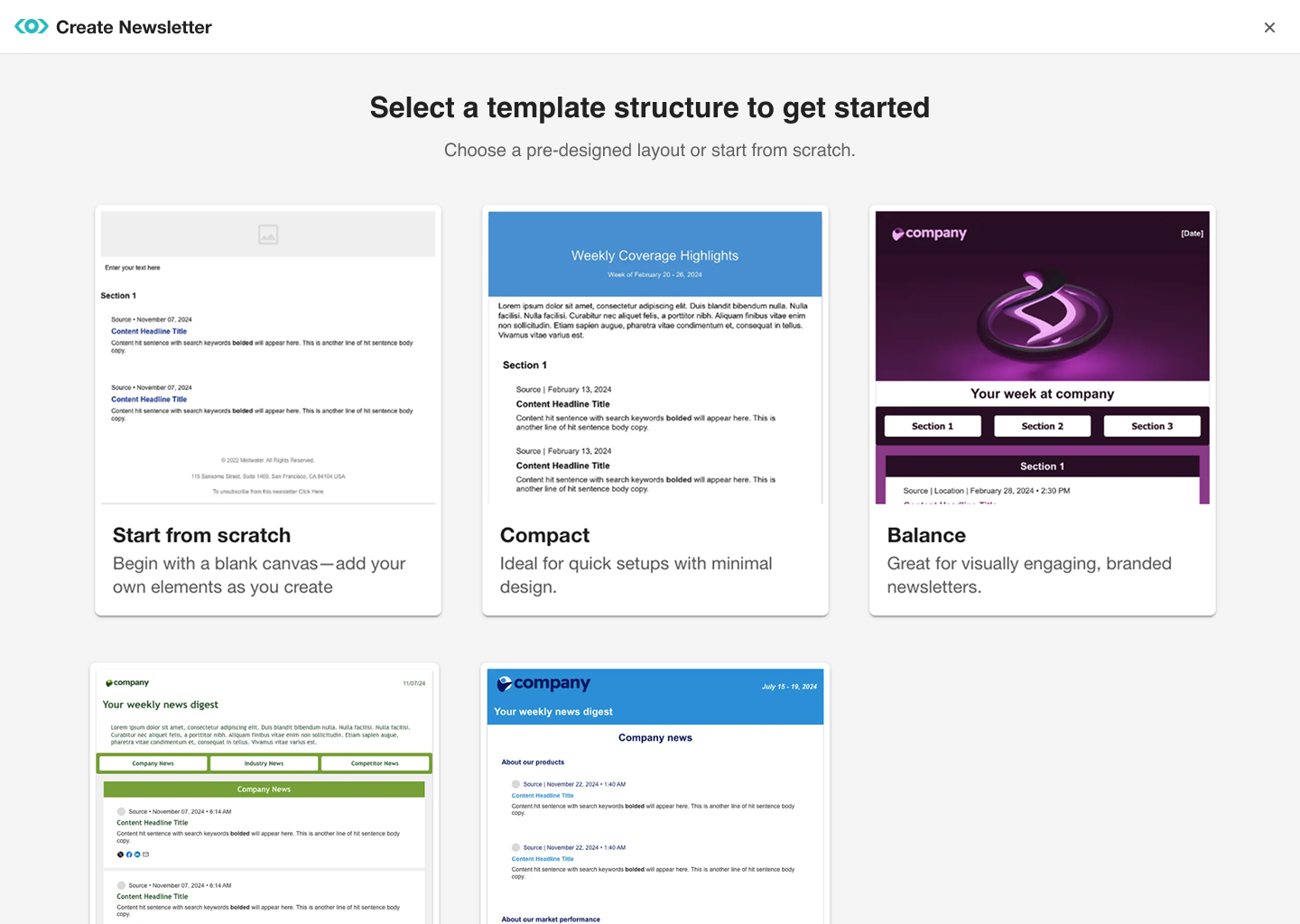
Unclear template differences, deeply nested settings, and too many upfront decisions made it hard for users to get started and stay focused on what matters.
Users had to manually sort, prioritize, and curate every piece of content with no smart suggestions, no summaries, and no way to learn from past newsletters.
"How might we redesign the newsletter experience to reduce complexity, surface the most relevant content intelligently, and let PR professionals go from intent to send with minimal effort?"
After identifying the three pain points, I facilitated brainstorming sessions with the team to generate solutions, then prioritized them using an Impact/Effort matrix.
AI Features Workflow & UX
Based on the research findings, I proposed an AI-first strategy — adding intelligence while simultaneously simplifying the experience.
Add AI Sort and AI Summary to eliminate manual content ranking — delivering immediate value with minimal engineering effort.
Flatten the 46-step workflow into an intuitive experience — reducing complexity and letting users create, preview, and send all in one place.
Redesign templates around PR use cases. AI-generate layouts from company branding and simplify customization — reducing cognitive load and cold-start friction.
AI learns from user preferences and AI Sort data to auto-generate complete newsletters. Users just review, approve, and hit send.
First, I introduced AI features to solve the biggest pain: users manually sorting and reading every article. AI Sort and AI Summary were shipped alongside the workflow redesign.
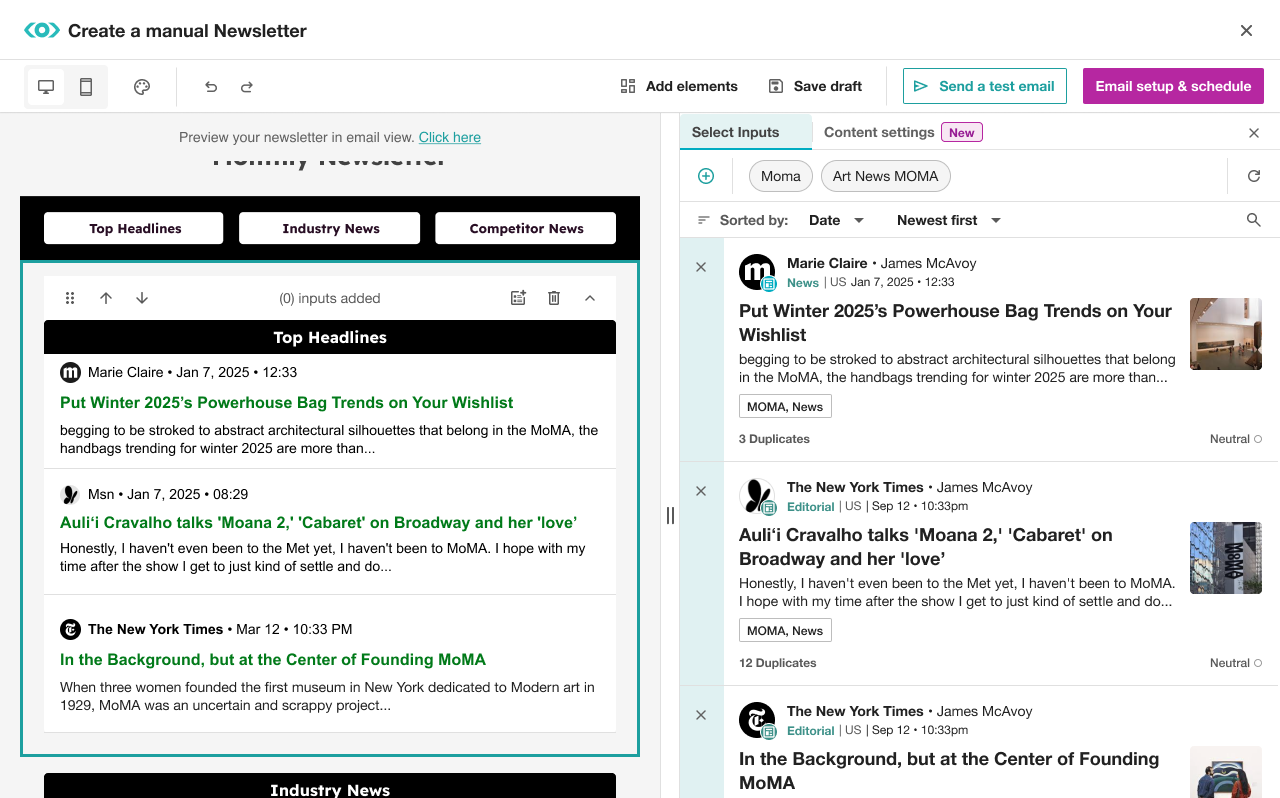
Automatically rank and prioritize content by relevance and importance, so the most critical stories surface first.
Generate concise summaries at three levels of granularity to save time for both creators and recipients.
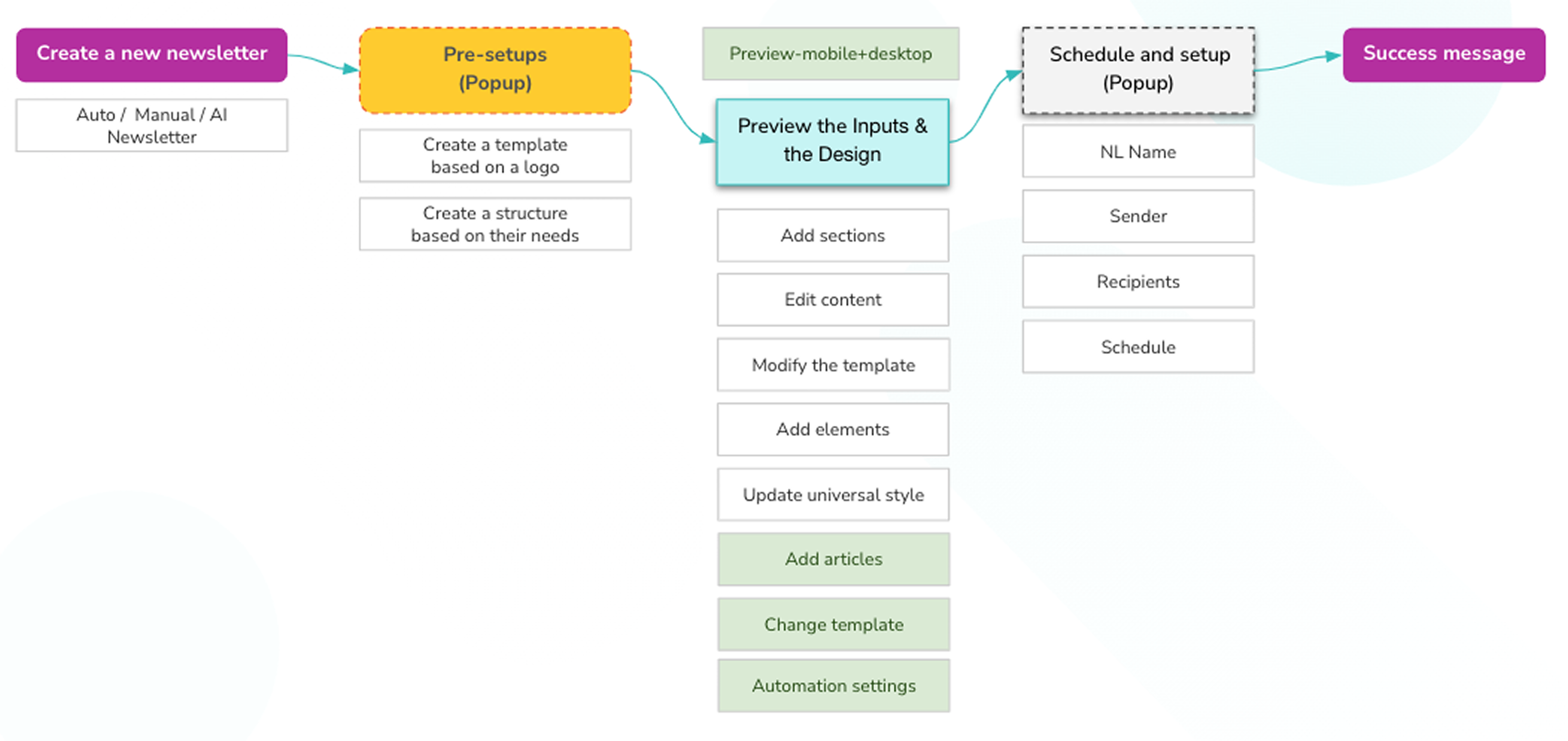
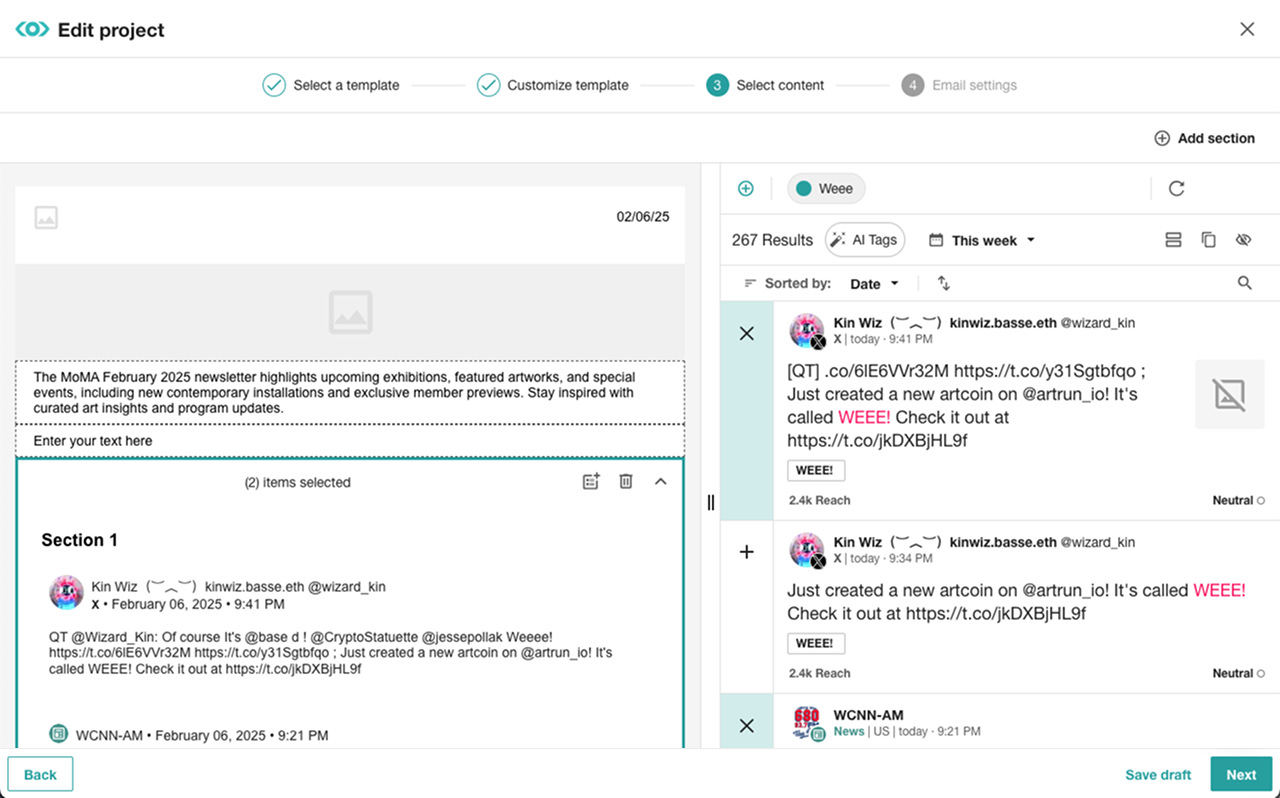
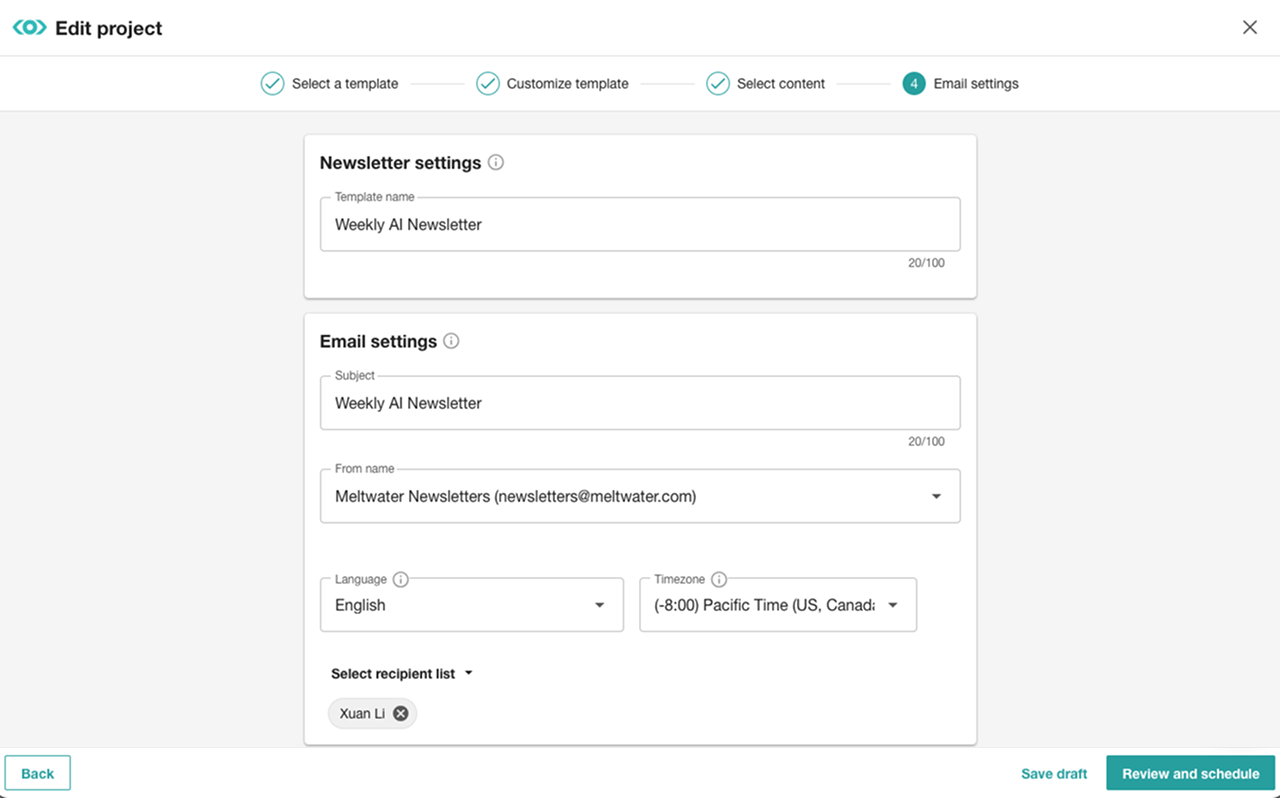
Flattened the 46-step workflow into 23 steps — putting template, content, settings, and preview all on one page so users never have to navigate back and forth.
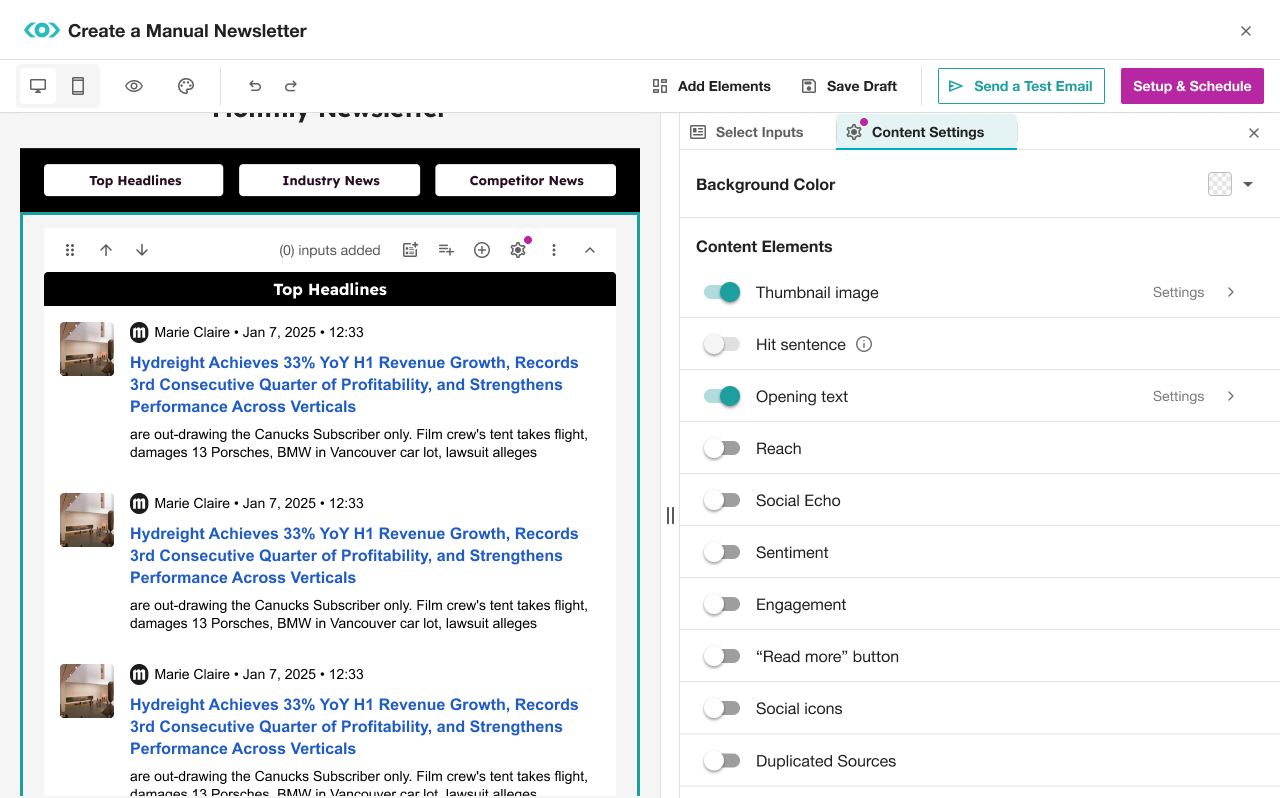
Previously, content settings and content selection lived on separate pages, forcing users to jump back and forth. Now they're merged into one place — users can configure template and content simultaneously without navigating away.
Users no longer need to reach the final step of the flow and then navigate back to make changes. The preview now lives on the same page — reducing clicks and eliminating unnecessary loading time.
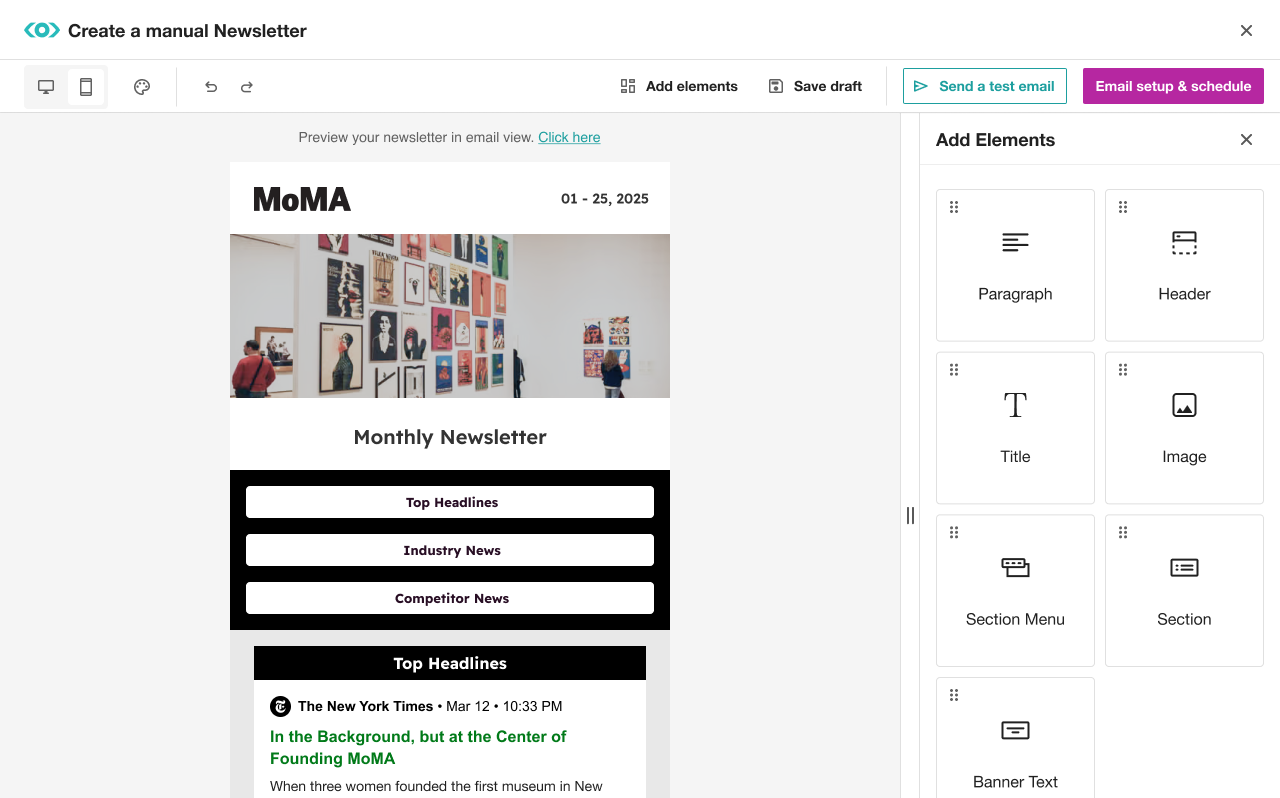
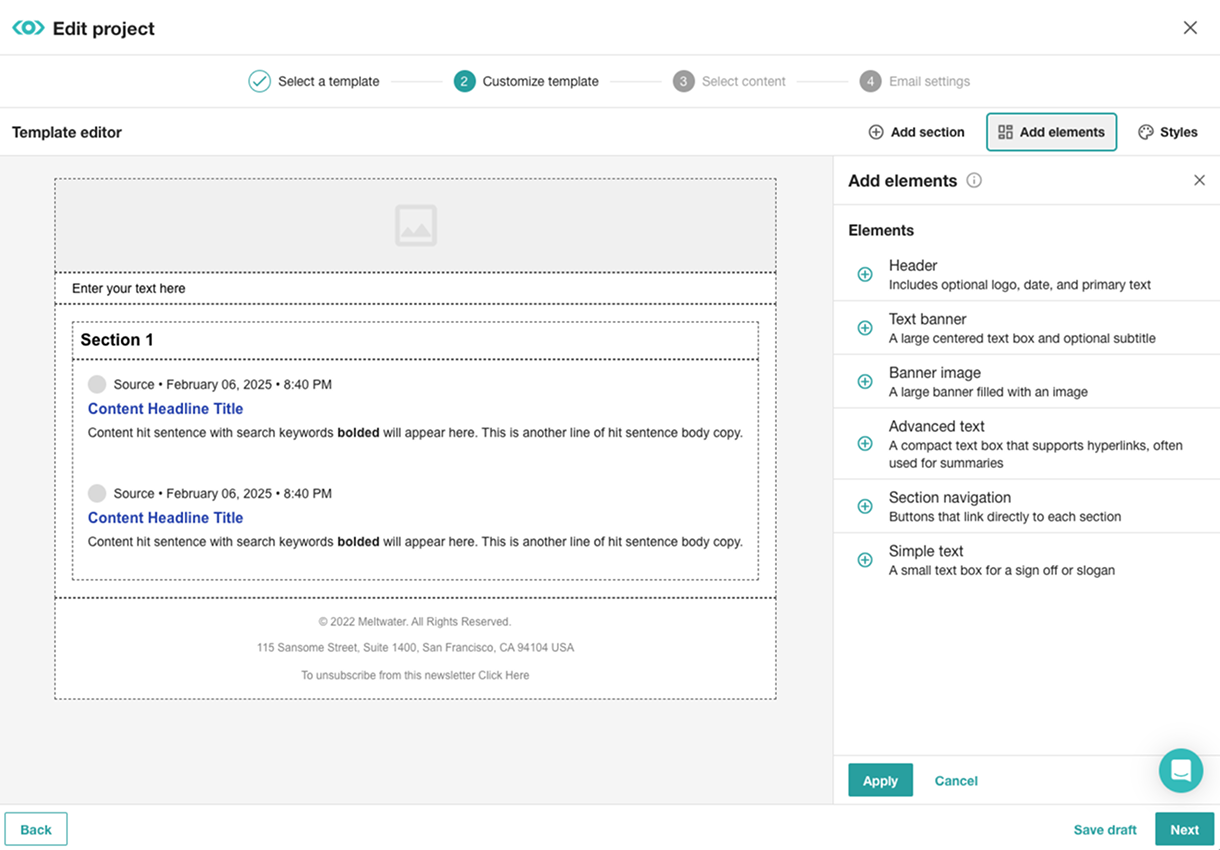
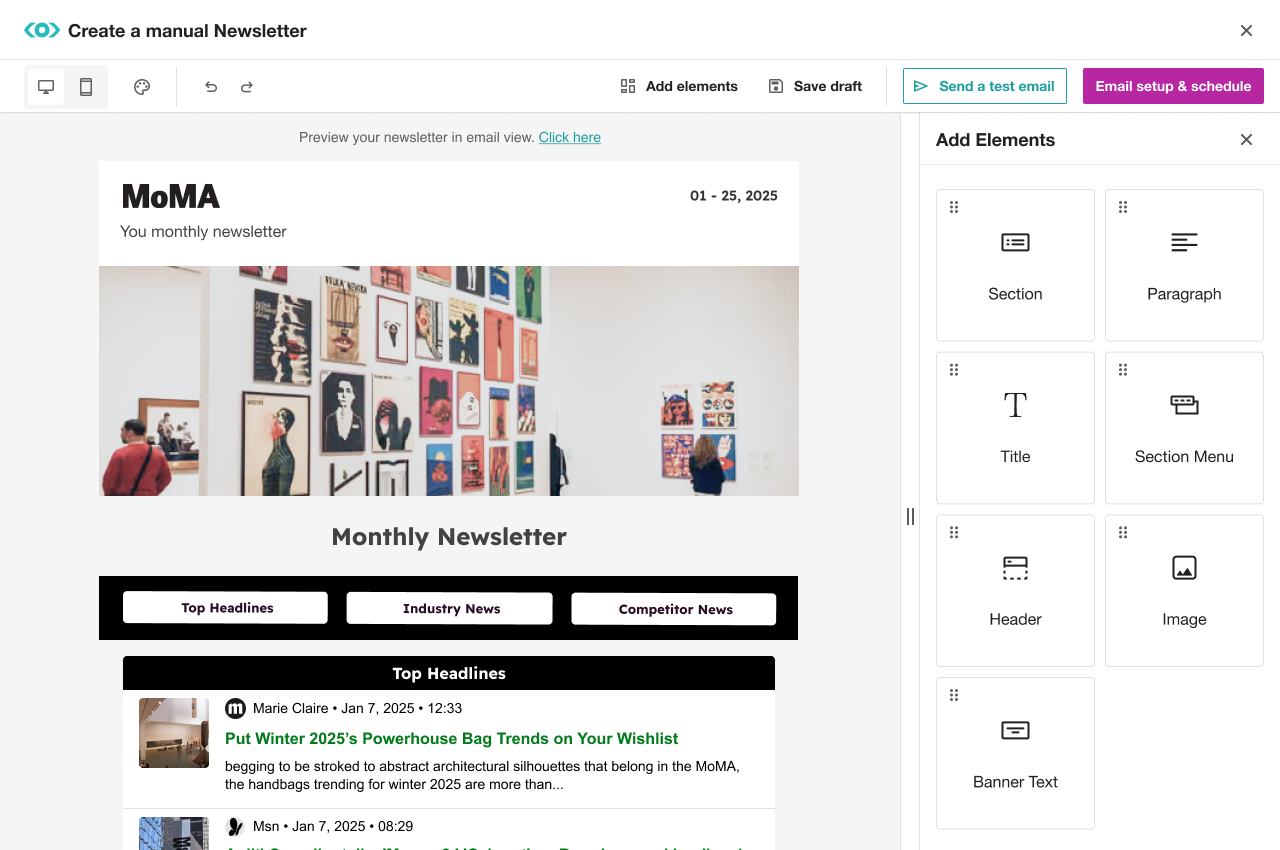
The old "Add Elements" panel was a wall of text labels, making it hard to understand what each element looked like. The redesign uses visual previews for every element, so users can see exactly what they're adding at a glance.
Templates redesigned around specific PR use cases with AI branding and simplified customization. Currently conducting iterative user research to validate and refine.
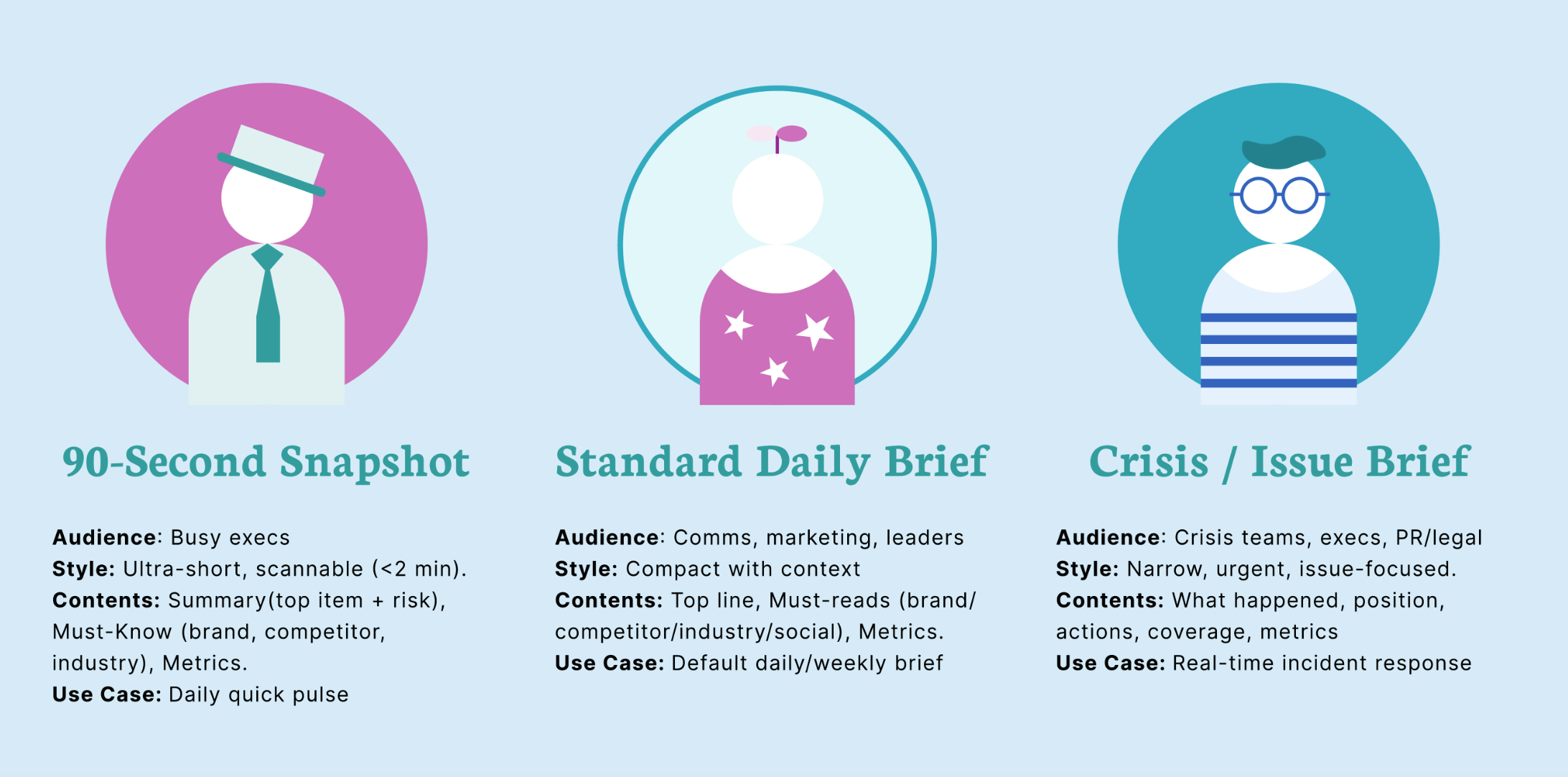
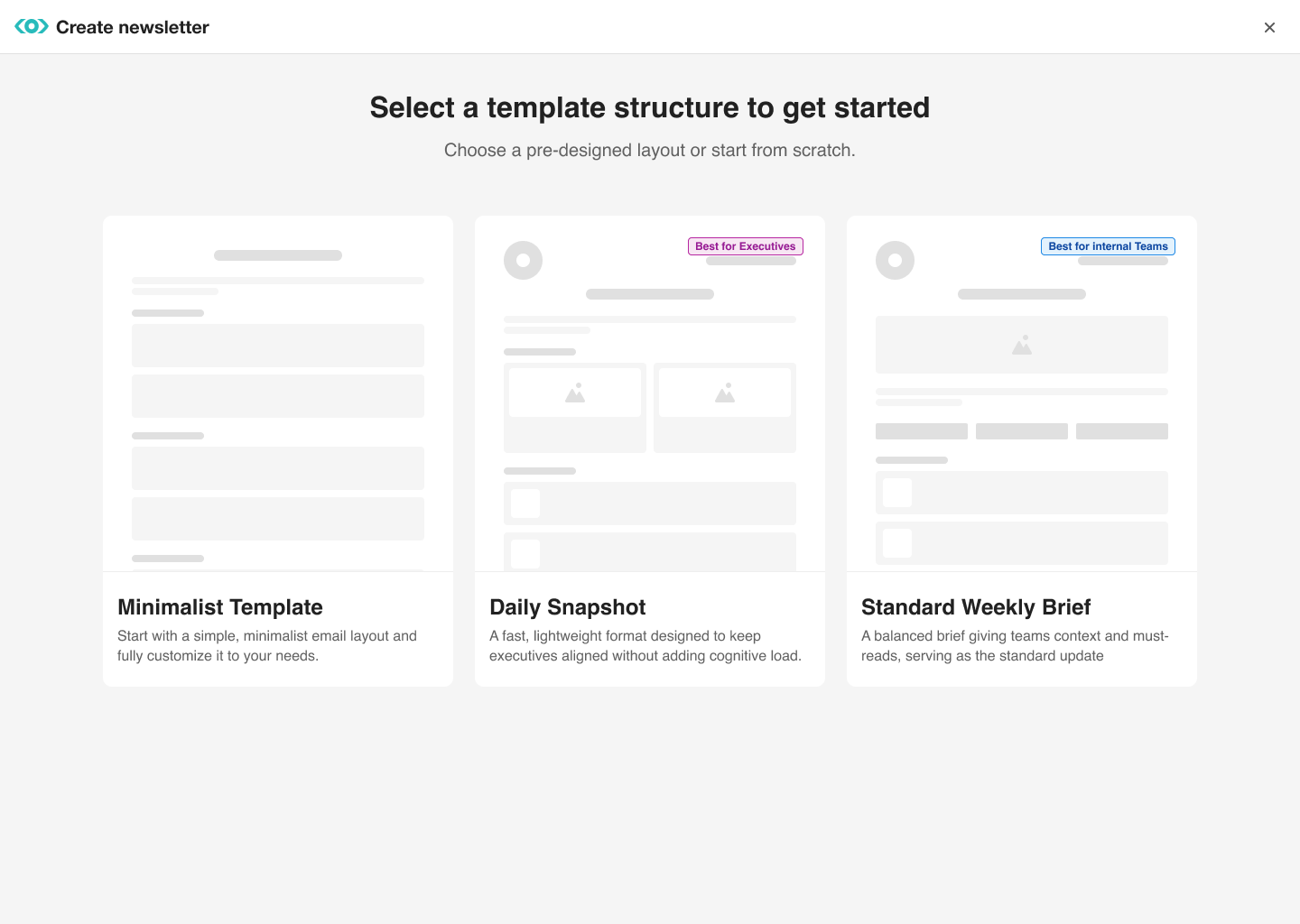
Replaced generic templates with three purpose-built layouts — 90-Second Snapshot, Standard Daily Brief, and Crisis Brief — so users start with a structure that matches their goal.
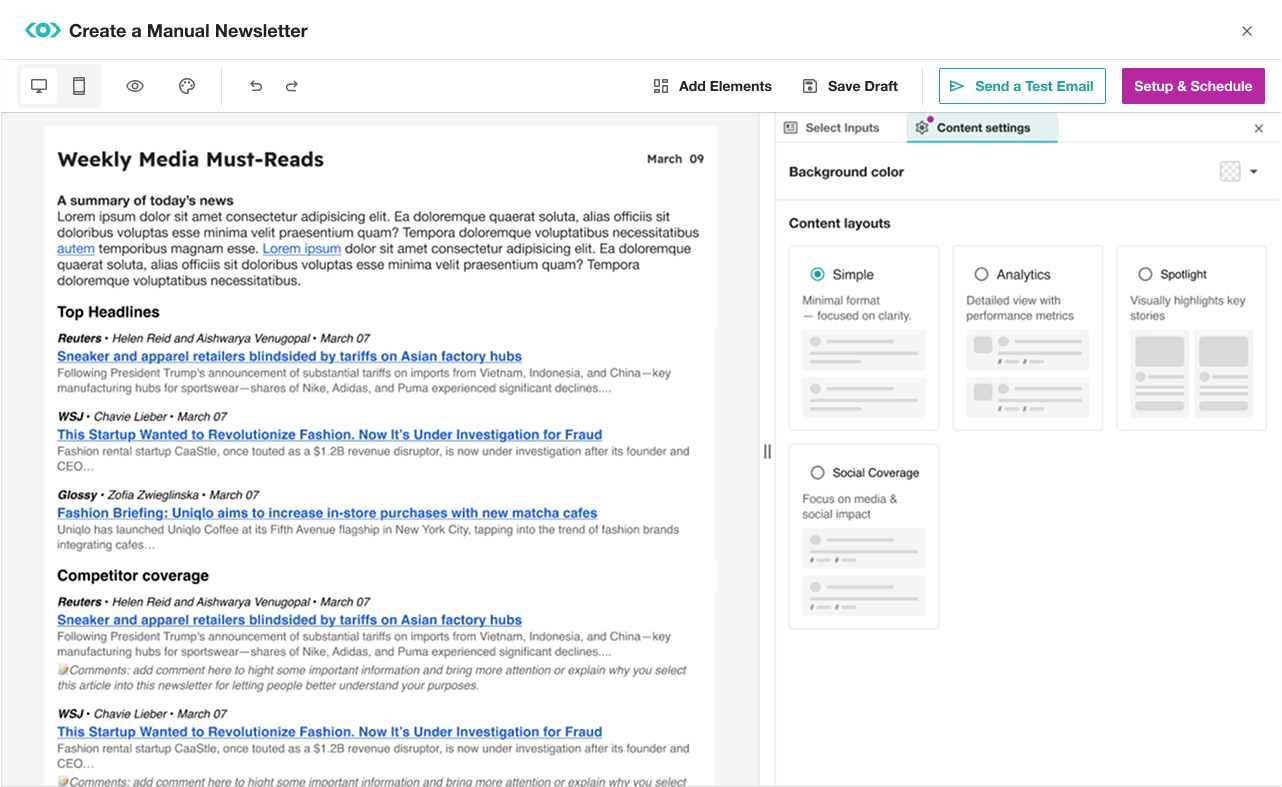
Replaced manual, one-by-one content configuration with pre-set content layouts. Each layout comes with content settings already configured — so users pick a layout and everything is set up automatically, instead of adjusting each setting by hand.
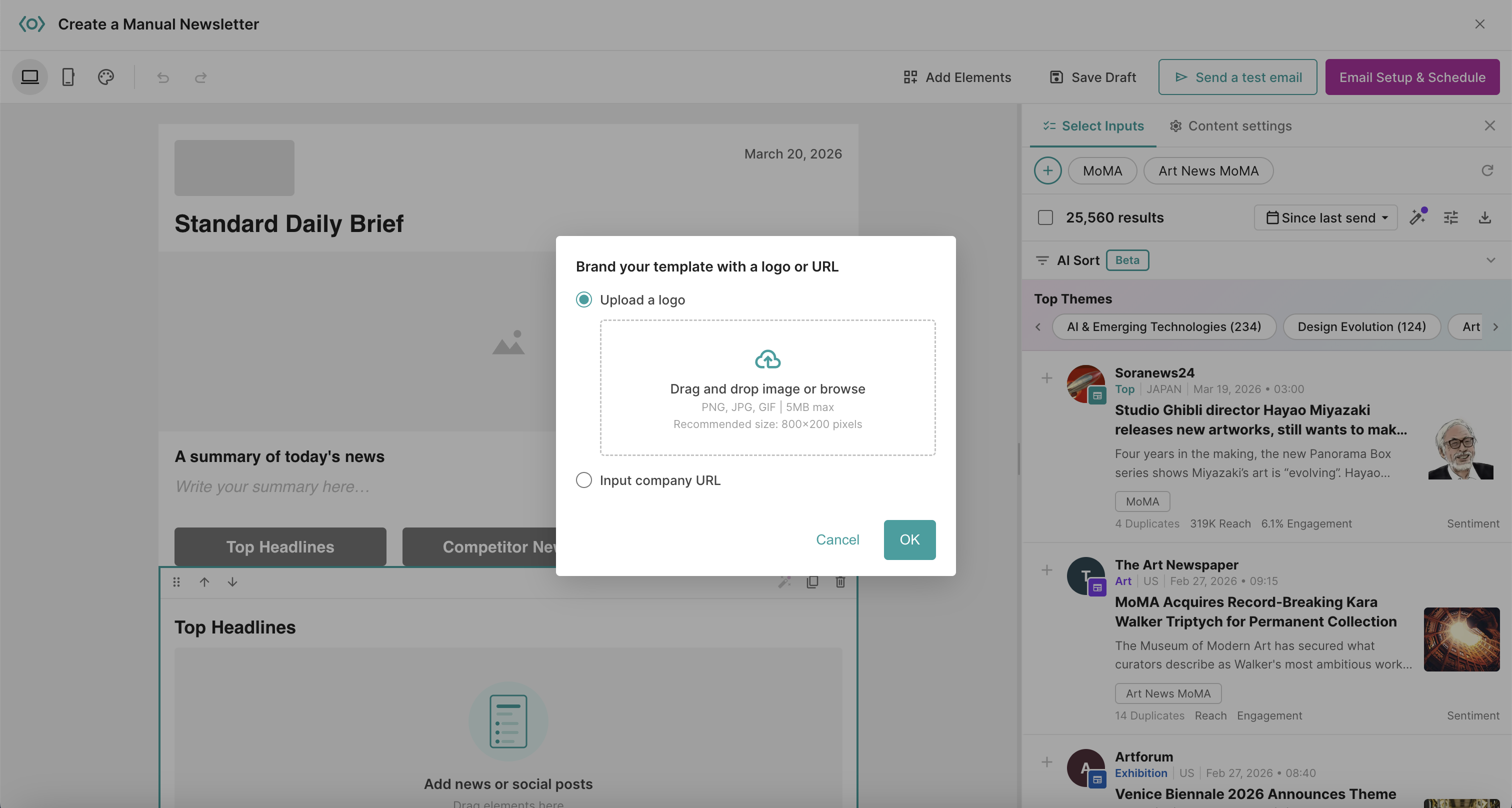
AI automatically applies company logo, brand colors, and fonts to templates — eliminating manual branding setup and the cold-start problem for new users.
The ultimate vision: AI learns from user behavior to auto-generate complete newsletters. Users shift from creators to editors — just review, tweak, and send.
AI analyzes past newsletters, AI Sort rankings, and user edits to understand preferences — then auto-generates a ready-to-send draft.
Instead of building from scratch, users open a pre-built newsletter and focus on what matters — reviewing and approving content.
The Newsletter had been treated as a static reporting surface. I redefined it as a high-frequency engagement infrastructure — a system designed to drive intelligent decision-making and retention.
FullStory analysis, user interviews, journey mapping, competitive audit
Persona creation, problem framing, pain point prioritization, HMW statements
Brainstorming sessions, impact/effort prioritization, design strategy roadmap
Wireframing, prototyping, use-case mapping, design system integration
Dev handoff, QA, CES tracking, iterative refinement across 3 phases